FREE CHEATS FOR
Walk-In: Fold It Together
Released November 10, 2026
Updated

 EAGLE CHEATS
How to use Eagle in Walk-In: Fold It Together
With Walk-In: Fold It Together running, press Insert to open the Eagle menu. The quick keys give direct access to Garment Counter and Ironing Queue. Use the menu for Fold Station, Shelf Map and Automation Status and the remaining listed features; close it with Insert to return to the app.
- F2 Garment Counter
Press F2 to turn Garment Counter on or off without opening the menu. - F3 Ironing Queue
Press F3 to turn Ironing Queue on or off without opening the menu. - Insert Fold Station
Press Insert, find Fold Station in the feature list, and switch it on or off. - Insert Shelf Map
Press Insert, find Shelf Map in the feature list, and switch it on or off. - Insert Automation Status
Press Insert, find Automation Status in the feature list, and switch it on or off.
EXPLORE THE MENUFeatures
8 features
The Eagle trainer for Walk-In: Fold It Together brings garment counter, ironing queue, fold station together for the Windows PC release. Press Insert during play to open the menu, choose a control and return to the current session. Additional controls cover shelf map, automation status, and team tasks during play.
- Garment Counter
- Ironing Queue
- Fold Station
- Shelf Map
- Automation Status
- Team Tasks
- Order Progress
- Work Replay
About the game
Walk-In: Fold It Together begins with thousands of garments scattered across a large space. Players iron creases, fold each piece and return it to the correct place, either alone or with up to eight friends. Automation gradually changes the repetitive work.
A shared session needs more than extra hands: players need to divide ironing, folding and filing so one station does not block the others. In solo play, each new automation upgrade is valuable only if it removes a real bottleneck. The satisfaction comes from making visible order out of a huge pile.
Official game page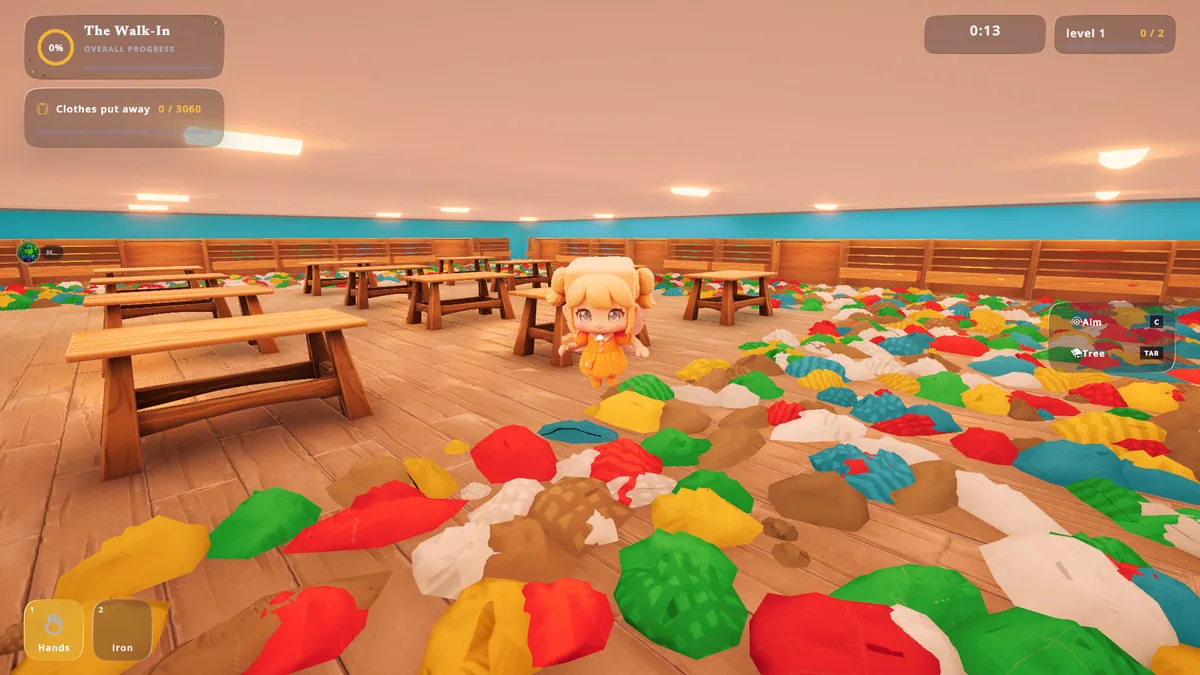
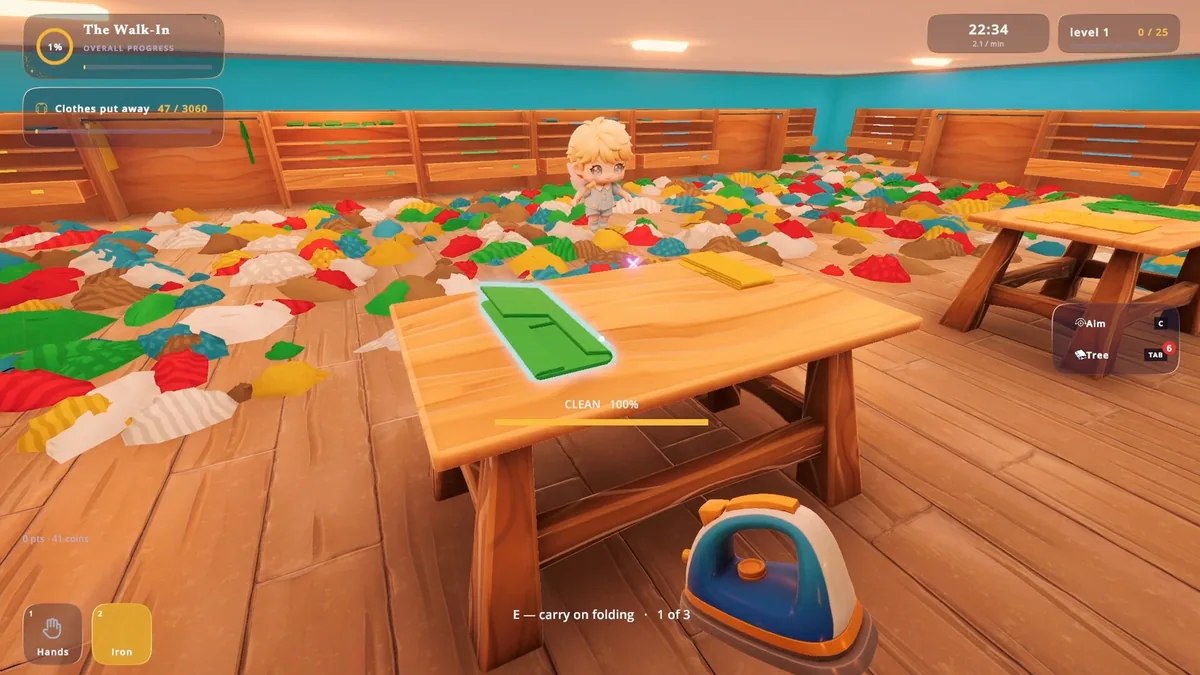
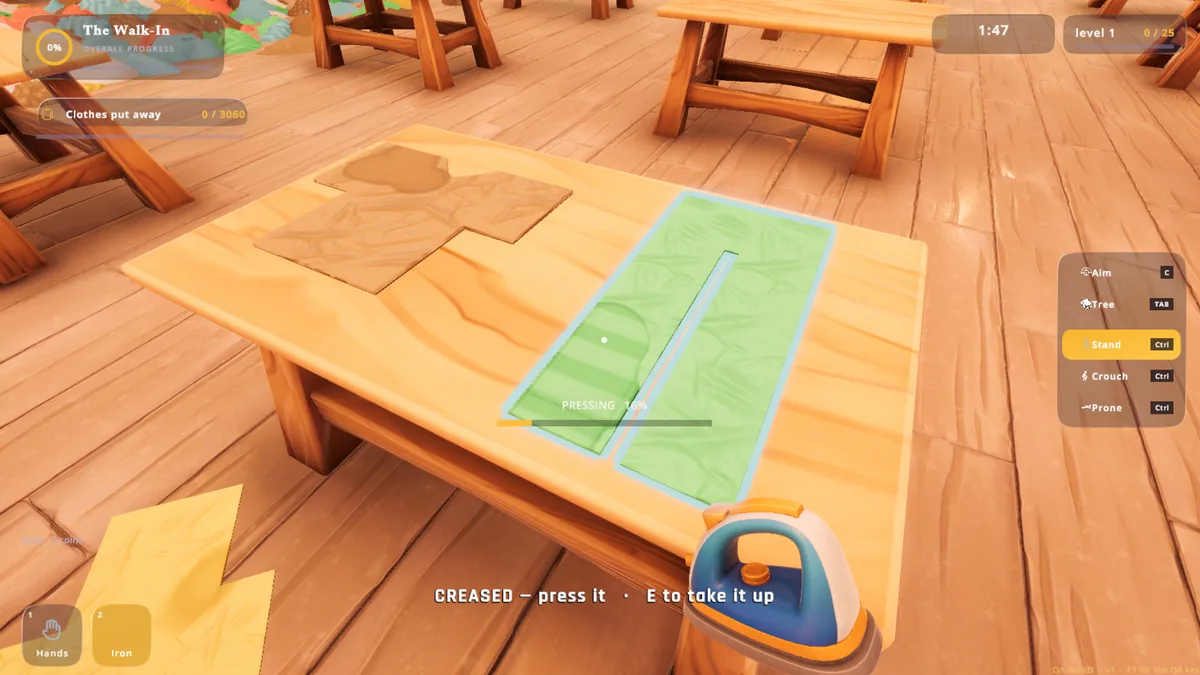
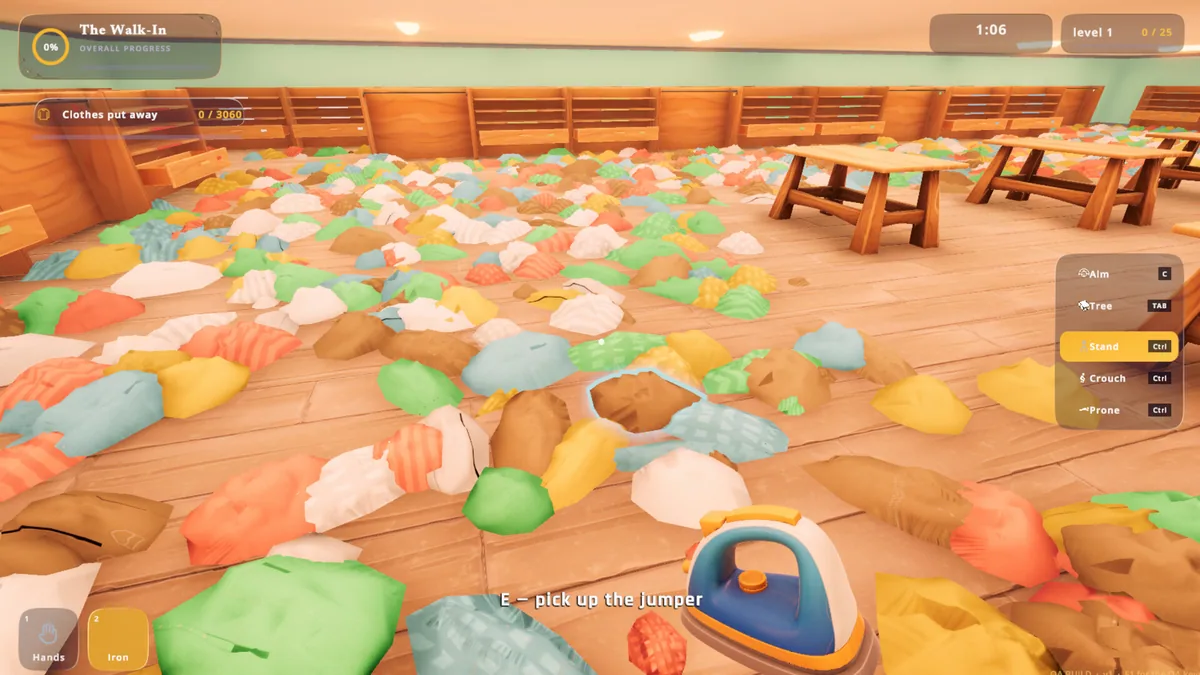
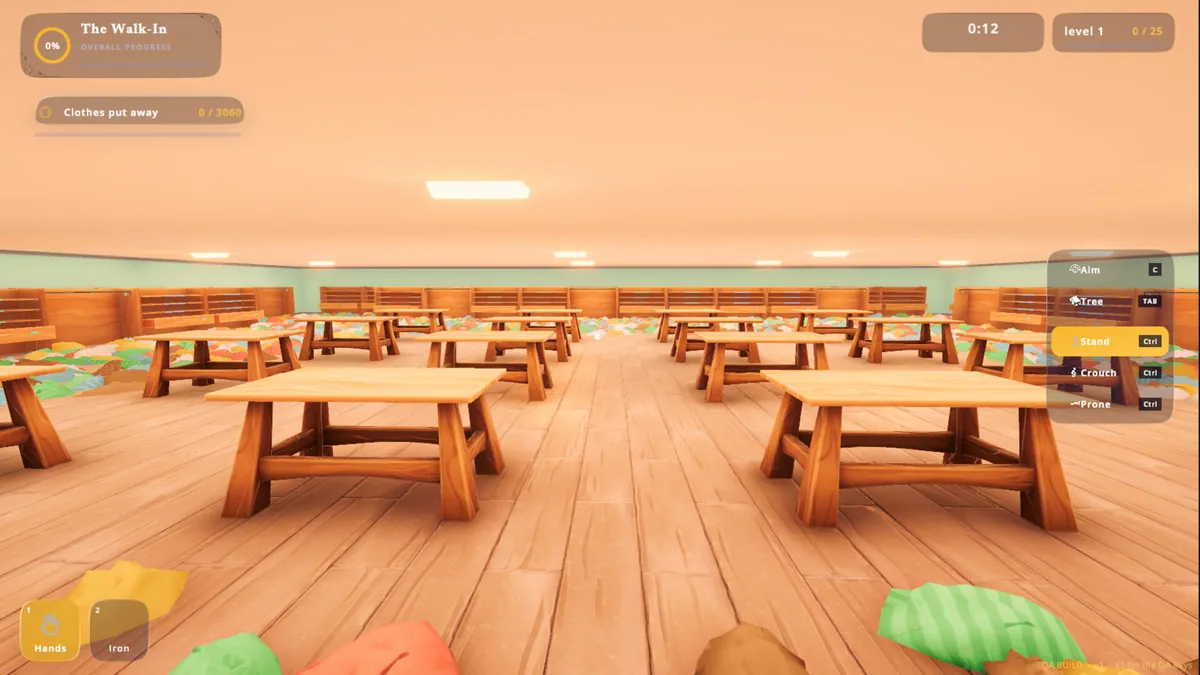
Using the Walk-In: Fold It Together trainer
The menu shows unsorted clothing, station queues and shelf assignments. It helps a team split the work and see whether a new machine is keeping pace. Progress remains tied to garments actually filed, rather than simply to time spent working.