FREE CHEATS FOR
Who Framed The Cat?
Released November 16, 2026
Updated

 EAGLE CHEATS
How to use Eagle in Who Framed The Cat?
With Who Framed The Cat? running, press Insert to open the Eagle menu. The quick keys give direct access to Seven-Day Calendar and Witness Statements. Use the menu for Neighborhood Map, Sighting Timeline and Evidence Board and the remaining listed features; close it with Insert to return to the app.
- F2 Seven-Day Calendar
Press F2 to turn Seven-Day Calendar on or off without opening the menu. - F3 Witness Statements
Press F3 to turn Witness Statements on or off without opening the menu. - Insert Neighborhood Map
Press Insert, find Neighborhood Map in the feature list, and switch it on or off. - Insert Sighting Timeline
Press Insert, find Sighting Timeline in the feature list, and switch it on or off. - Insert Evidence Board
Press Insert, find Evidence Board in the feature list, and switch it on or off.
EXPLORE THE MENUFeatures
8 features
The Eagle trainer for Who Framed The Cat? brings seven-day calendar, witness statements, neighborhood map together for the Windows PC release. Press Insert during play to open the menu, choose a control and return to the current session. Additional controls cover sighting timeline, evidence board, and suspect notes during play.
- Seven-Day Calendar
- Witness Statements
- Neighborhood Map
- Sighting Timeline
- Evidence Board
- Suspect Notes
- Daily Plan
- Case Progress
About the game
Who Framed The Cat? follows Mandarin, a ginger cat accused because of a look-alike. Seven days are available to investigate a seaside neighborhood. The mystery depends on distinguishing what witnesses saw from what they assumed.
A clue that points to an orange cat may implicate either animal until timing and location are checked. Visiting a witness on a different day can add context. Keeping evidence ordered by day helps avoid losing a useful lead to the deadline.
Official game page

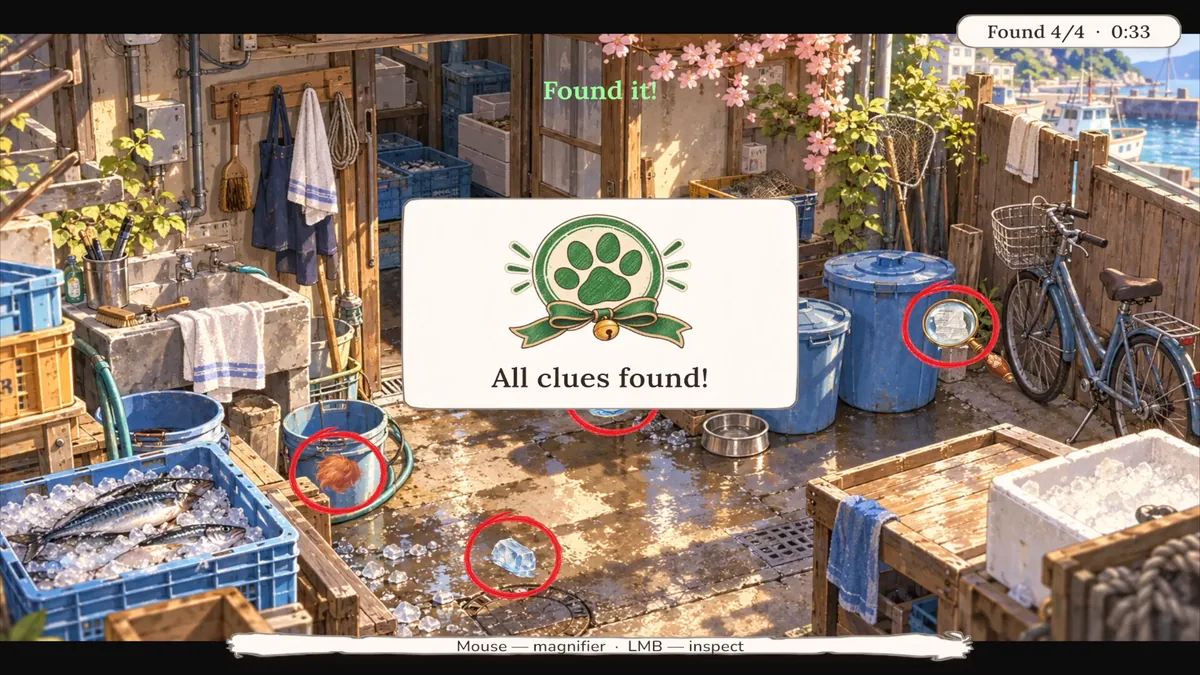


Using the Who Framed The Cat? trainer
Open the Eagle menu with Insert to review the seven-day calendar, witness statements and neighborhood map. The caseboard links sightings with physical clues. Use the daily plan before spending time on a distant lead across town.